27 March 2012
26 March 2012 – Moth Equinox
 |
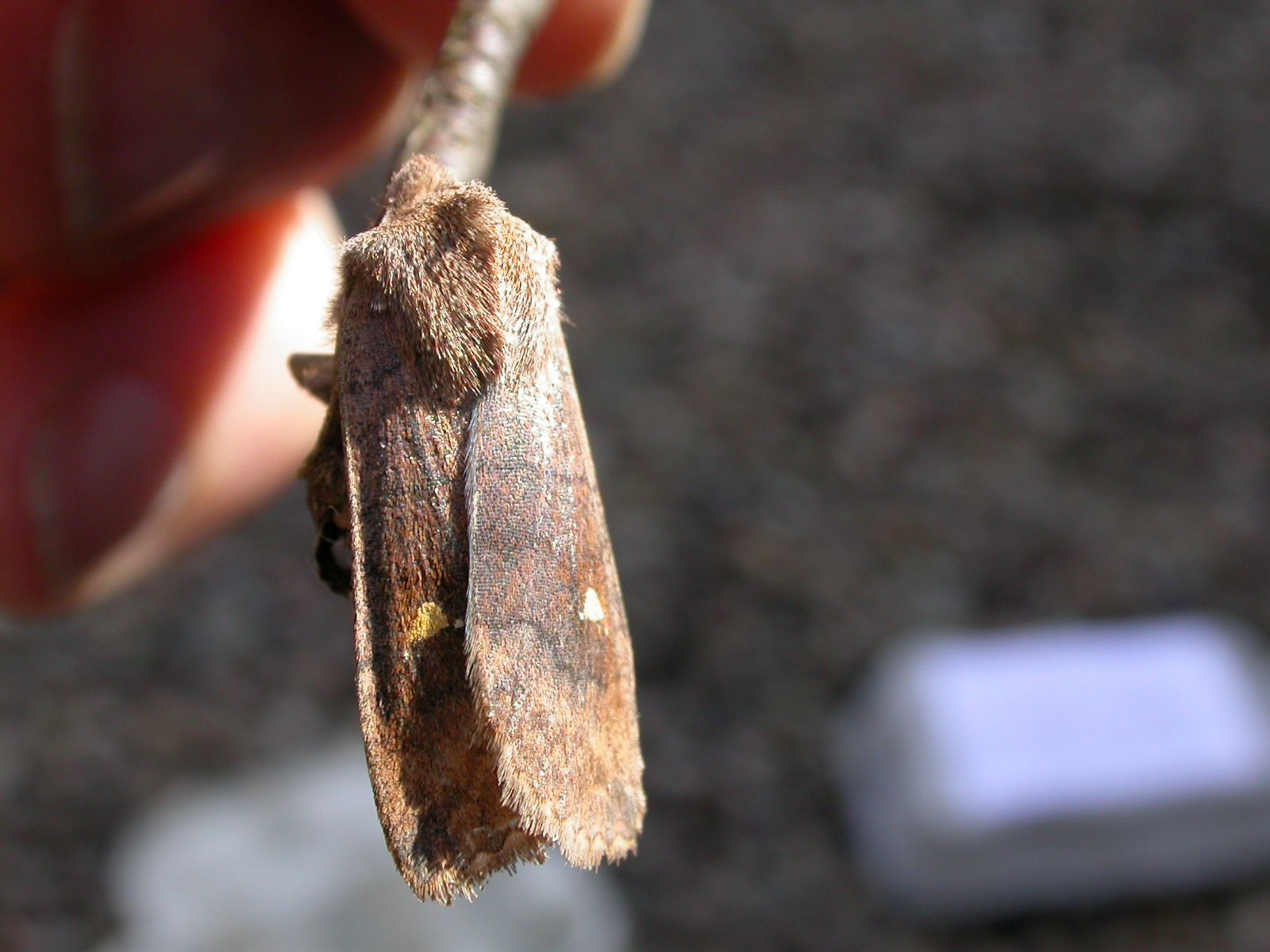
| The Satellite (Eupsilia transversa) |
The days have been warm but the nights have still been leaving a frost at dawn so the assumption has been that it is probably too cold for the moth trap. The trial run at the weekend produced two new species so I was obviously wrong. The Satellite and the Twin-spotted Quaker have been positively identified despite the Satellite arriving in two colourways – gold stigmata and white.The Latin name is Eupsilia transversa (very bald from eu – well; psilos – bare; transversus – from the transverse fasciae on the forewing). I assume the little extra stigmata next to the larger one give it its common name (see photos).
 |
| The Satellite (Eupsilia transversa) |
The Twin-spotted Quaker (Orthosia munda) is another variable species with forewings of different colours. The twin-spots aren’t always there apparently. The Latin name comes from orthosis-making straight and mundus = neat and tidy.Why so many Quakery moths? They are all quite discreet and unshowy as moths….can this have anything to do with it? Hebrew Characters and Small Quakers made up the numbers – all safe because the bats haven’t yet taken to the air. But that can’t be long if this extraordinary warmth continues.In June there will be a moth-trapping and report every day….
 |
| Twin-spotted Quaker (Orthosia munda) |
Recent Moths
- Two Final New Micromoths
- Three More New Micromoths
- Three Majestic New Micromoths
- Invasion of the Beet-Army Worms
- Sarah Gillespie’s Mezzotint Moths
- A Visit From the Privet Hawk-Moth
- The Splendid Scarlet Tiger
- An Uncertainty of Species
- A New Micro-moth that Inhabits Where Others Do Not
- Brown Moths and ‘Binsey Poplars’
- SHANDY HALL MOTH LIST to August 2025 (alphabetical with links)
- Rise of the AI Naturalist