21 July 2026
Sarah Gillespie’s Mezzotint Moths
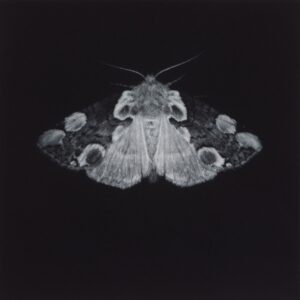
Art is one of the most poignant forms of attention, and artist Sarah Gillespie’s most recent collection of mezzotints pay homage to a group of insects often forgotten: the moth. To some dedicated individuals (like the ones that run this blog!), moths are the basis for connection with the natural world and, some days, the reason for getting out of bed, but the attention they receive from the general public has dwindled along with their numbers over the past decades. Since 1968, moth populations have decreased by a third in the UK, and we’ve lost more than 50 species in the past century alone.
“In our brightly lit, self-absorbed and busy lives, it seems to me that it is above all our attention to the lives of our fellow creatures that has slept. In that sleep of our attention, the damage has been enormous and, if it is to be undone, we must open our eyes and look long and hard at what is happening,” reads an artist’s statement from her website. Gillespie’s method of eye-opening lies in the use of mezzotint, a rarely used method of printmaking from the seventeenth century. It’s a slow and meticulous process where an artist begins with a rough sheet of metal, then gradually smooths out areas so they’ll hold less ink.
The final image will appear in detailed grayscale, and Gillespie’s are breathtaking: moths, some of them dozens of centimeters long, loom out of pitch black backgrounds. With wings outstretched and each scale painstakingly printed, they appear almost exactly how they would if you found them flitting around the woods at night, albeit with slightly different dimensions.
As habitat loss, pesticides and climate change encroach on the livelihoods of all our non-human neighbors, it becomes more important than ever to preserve them in both their physical forms and in the forms of painting and printmaking. Both encourage our attention to these creatures, and to the fact that they could soon only exist in prints unless our attention is accompanied by action.
Post by Sarah Leonard (UPenn Intern 2026)
Recent Moths
- Two Final New Micromoths
- Three More New Micromoths
- Three Majestic New Micromoths
- Invasion of the Beet-Army Worms
- Sarah Gillespie’s Mezzotint Moths
- A Visit From the Privet Hawk-Moth
- The Splendid Scarlet Tiger
- An Uncertainty of Species
- A New Micro-moth that Inhabits Where Others Do Not
- Brown Moths and ‘Binsey Poplars’
- SHANDY HALL MOTH LIST to August 2025 (alphabetical with links)
- Rise of the AI Naturalist