13 July 2023
4 July 2023 – Cold-weather Catch
The moths in the trap this morning were of a rather homogenous variety. Because the weather has been unusually windy and cold, only the toughest moths dare to fly. Dark Arches, Heart-and-Darts, various Wainscots and a few Poplar Hawk-moths were the most common by far. There were hardly any micro-moths at all: Only a few Crambidae and a single Tortrix.
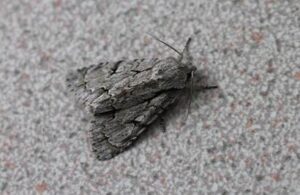
One unusual moth, either a Dark Dagger (Acronicta tridens) or Grey Dagger (Acronicta psi), made an annual debut. In their adult form, these two species of Acronicta are impossible to differentiate without dissection. Their body size, coloration, patterning, and flight behavior are all virtually identical. Even differences in their naming fail to truly render the Acronicta tridens and Acronicta psi distinct, as each speciation makes reference to the same trident shape on the bottom of the moths’ wings: Psi compares the marking to the Greek letter Ψ (psi), and Tridens (“three-toothed”) describes the same shape. The Grey Dagger is thought to be more common than the Dark Dagger, but it’s difficult to say for certain because the determination relies on data that may be flawed, due to the identification problem. Both moths fly during June and July, and both have larvae that feed on Hawthorn, Blackthorn, and other broad-leaved trees and shrubs.
Post by Autumn Cortright. UPenn intern.
Recent Moths
- Two Final New Micromoths
- Three More New Micromoths
- Three Majestic New Micromoths
- Invasion of the Beet-Army Worms
- Sarah Gillespie’s Mezzotint Moths
- A Visit From the Privet Hawk-Moth
- The Splendid Scarlet Tiger
- An Uncertainty of Species
- A New Micro-moth that Inhabits Where Others Do Not
- Brown Moths and ‘Binsey Poplars’
- SHANDY HALL MOTH LIST to August 2025 (alphabetical with links)
- Rise of the AI Naturalist