Shandy Hall Moths
16 May 2014
15 May 2014 – Three Rivulets Side by Side
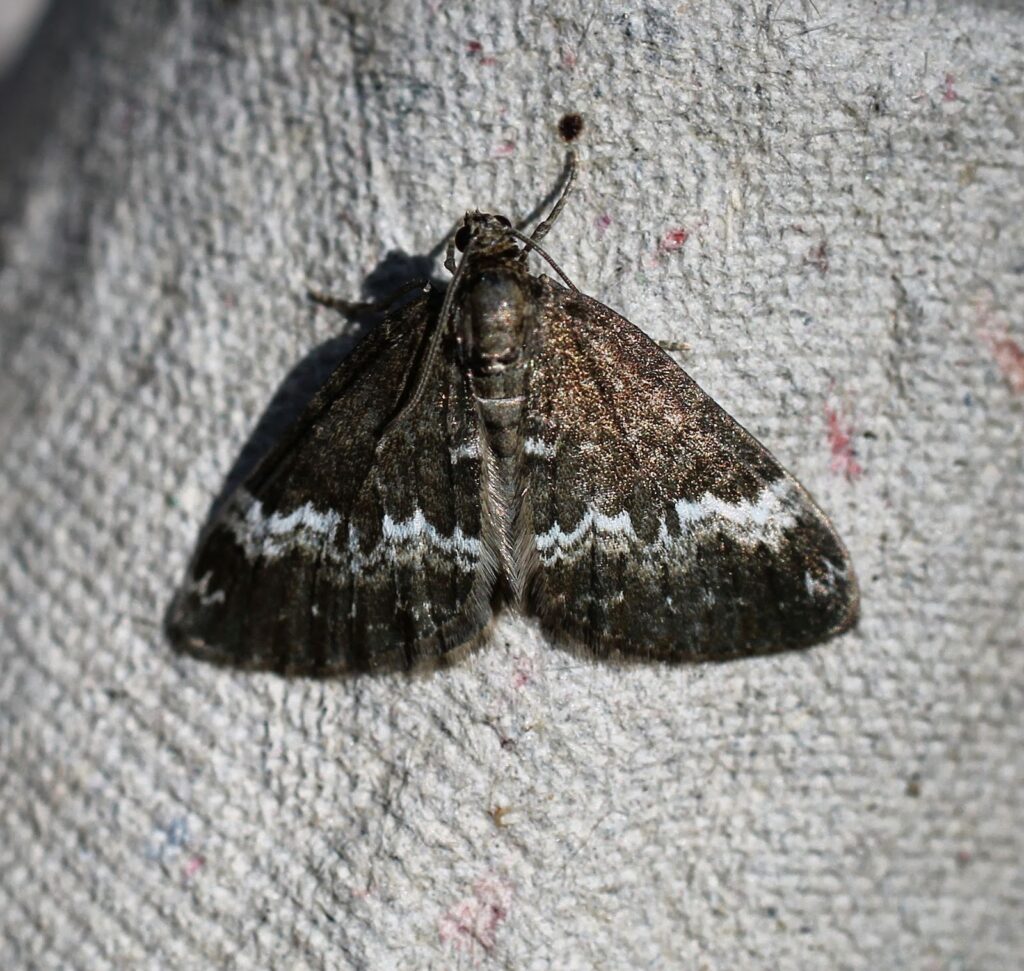
Small Rivulet (Perizoma alchemillata) The warmer weather and the prospect of moth activity was promising. I awoke at 4.15am and hearing the dawn chorus, decided to switch off the mercury vapour light and see what was in the trap. The spotted fly-catcher, the robin and the wren are all wise to the fact that a […]
14 May 2014
14 May 2014 – A Midspring Day’s Dream
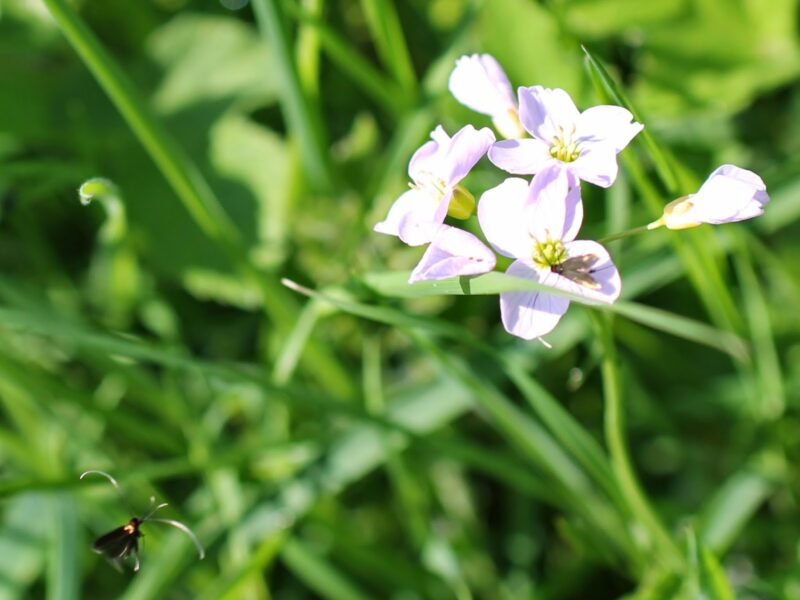
(Cauchas rufimitrella) There are two of them in the photograph and both have found what they have been seeking – the Cuckoo flower or Lady’s smock (Cardamine pratensis). One is mid-air and the other is resting on a petal of the flower. There are a dozen or so stems of Cuckoo flower in the quarry […]
10 May 2014
10 May 2014 – Purple-barred Yellow – Identity Confirmed?
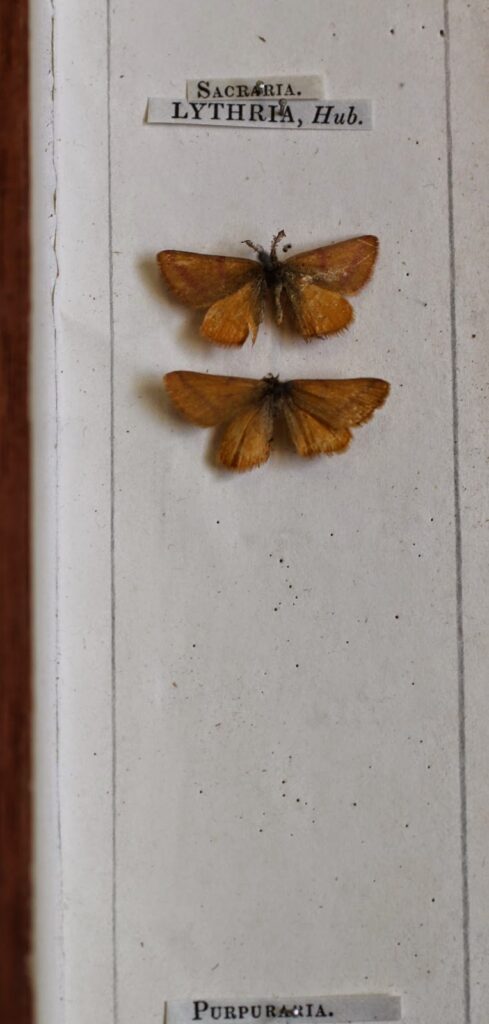
Purple-barred Yellow (Lythria purpuraria) That’s what it says on the label – Lythria purpuraria. We have been trying to identify the species of moths in the cabinet drawers that will be on display in the gallery at Shandy Hall from this Sunday. These drawers are from the Allis Collection dating from the mid to late nineteenth […]
4 May 2014
4 May 2014 – Confusing Identification
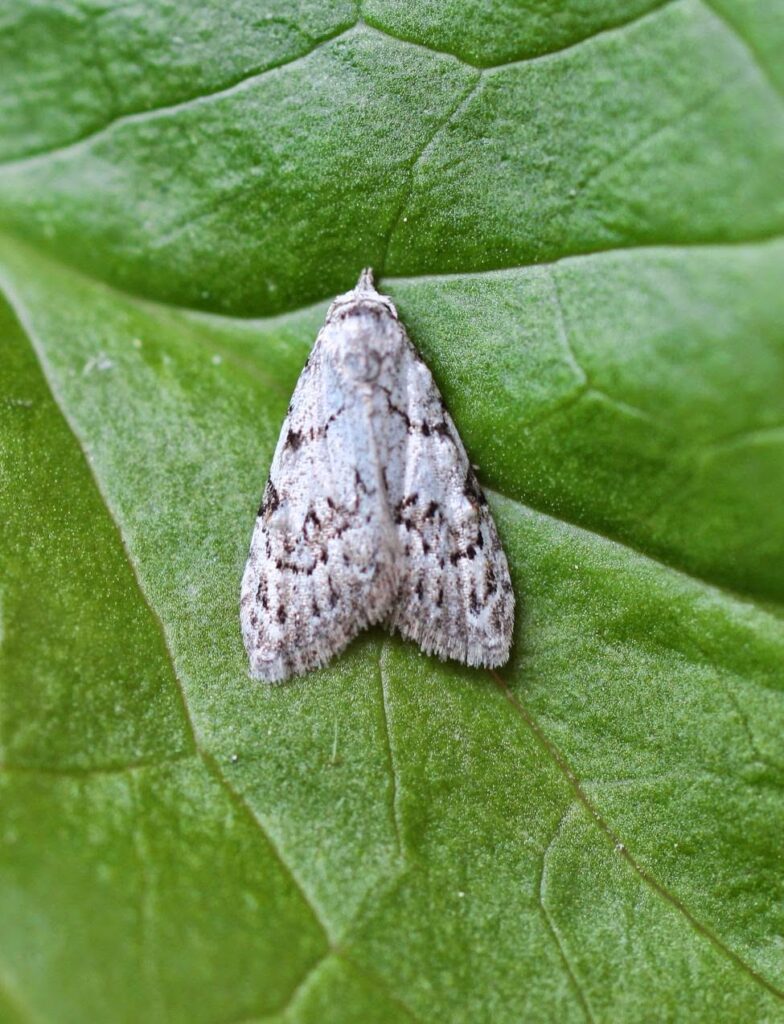
Least Black Arches (Nola confusalis) This moth confused me – which is only to be expected when its Latin name is translated. The Least Black Arches (Nola confusalis) seems to have caused confusion from the very first. I can find no reference to the moth in Westwood’s ‘British Moths and their Transformations’ so there is […]
30 April 2014
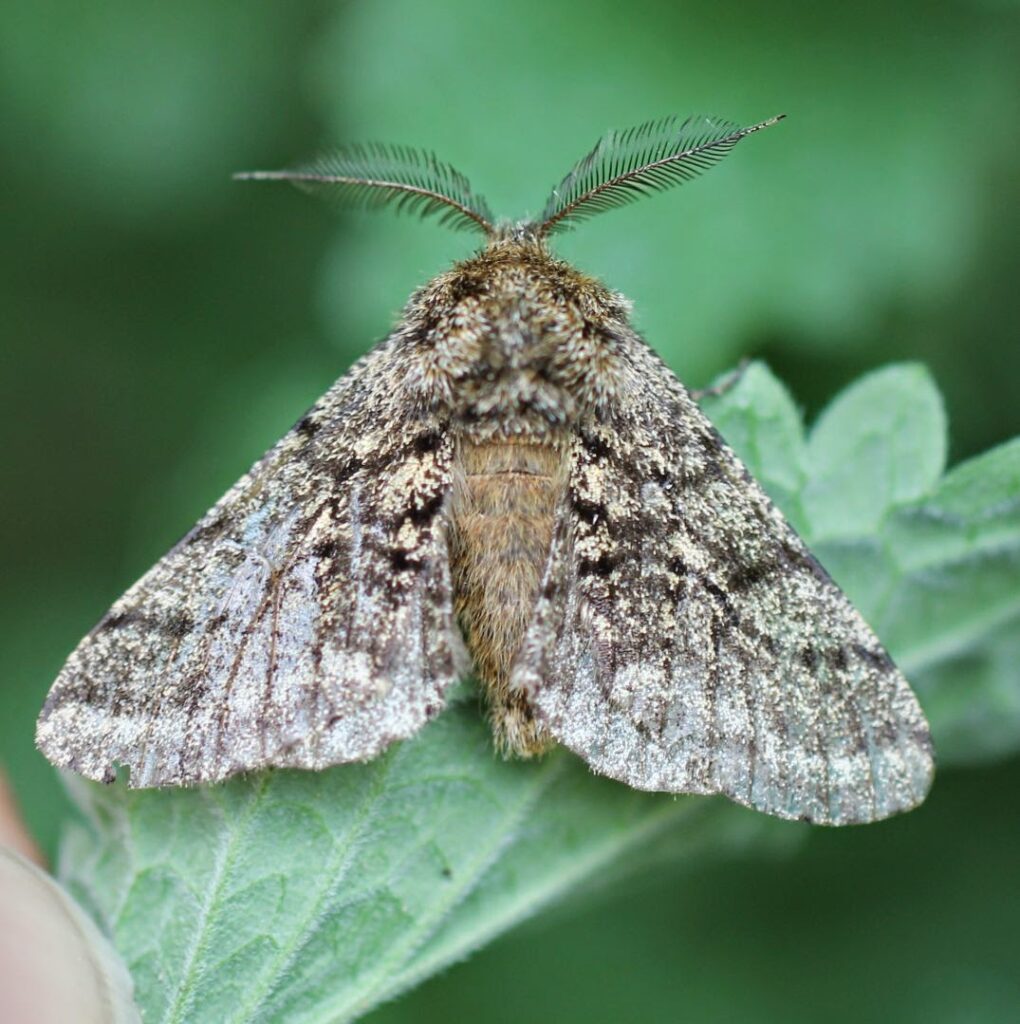
30 April 2014 – Shaggy Moth for Shaggy Garden
Brindled Beauty (Lycia hirtaria) Derek Jarman : If a garden isn’t shaggy, forget it. The Brindled Beauty is the perfect moth for the shaggy garden as the Latin reveals – lycia : shaggy like a wolf; hirtaria : from hirtus meaning shaggy. The moth is very furry and its wing-scales are also sprinkled delicately with gold-dust. […]
29 April 2014
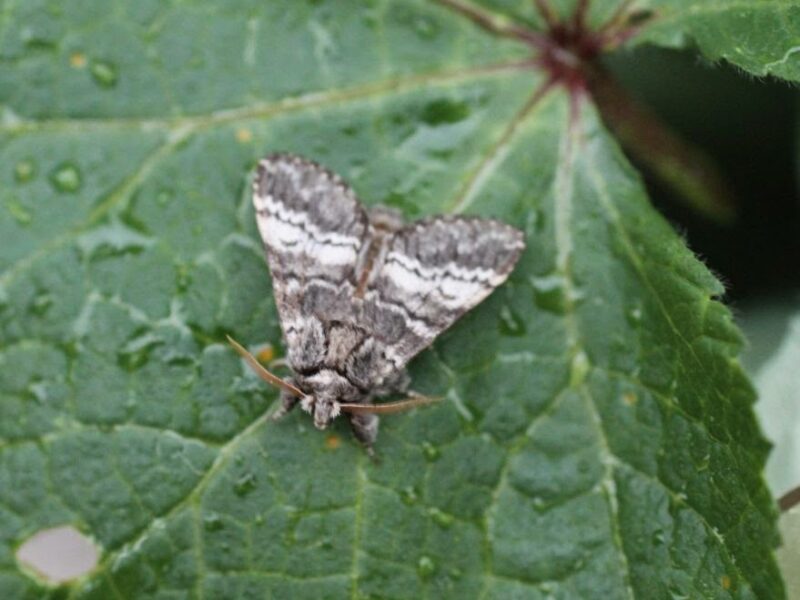
29 April – 2014 ‘…the rest I dedicate to the Moon’
Lunar Marbled Brown (Drymonia ruficornis) Drymonia ruficornis is the scientific name of this moth – but the common name is Lunar Marbled Brown. The first part of the Latin name is a reference to the oak coppice where this species lives; the second to the red antennae that are just about visible in the image. […]
26 April 2014
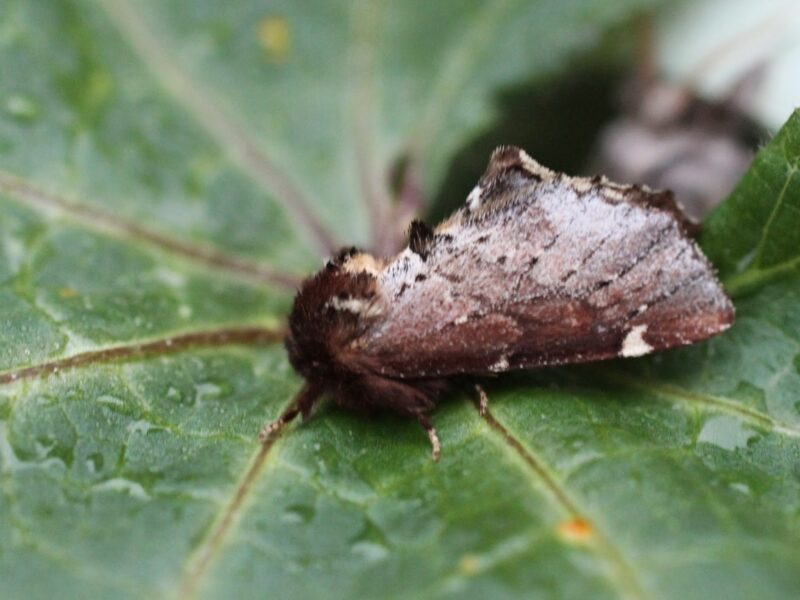
26 April 2014 – Oxymoron Moth
Scarce Prominent (Odontosia carmelita) Our National Gardens Scheme evening brought as many moths as it did people – not many. However, what looked as if it was going to be a complete wash-out (the rain persisted, the east wind picked up) was saved by an examination of the previous night’s catch which included two new […]
19 April 2014
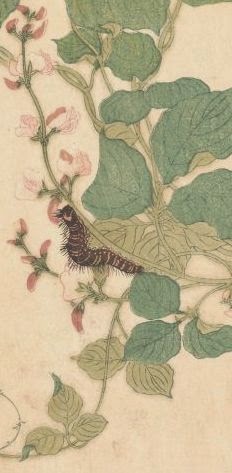
17 April 2014 – Utamaro and the Caterpillar
Utamaro Arctiidae By the image above it is clear that last night was not a good night for moths in Coxwold. The bats were out early, circling above the quarry and zipping around the tallest branches of the ash trees – mirroring the micro-moths among the grass stems beneath. Except there were no micro-moths beneath […]
12 April 2014
11 April 2014 – Moths of the Moon
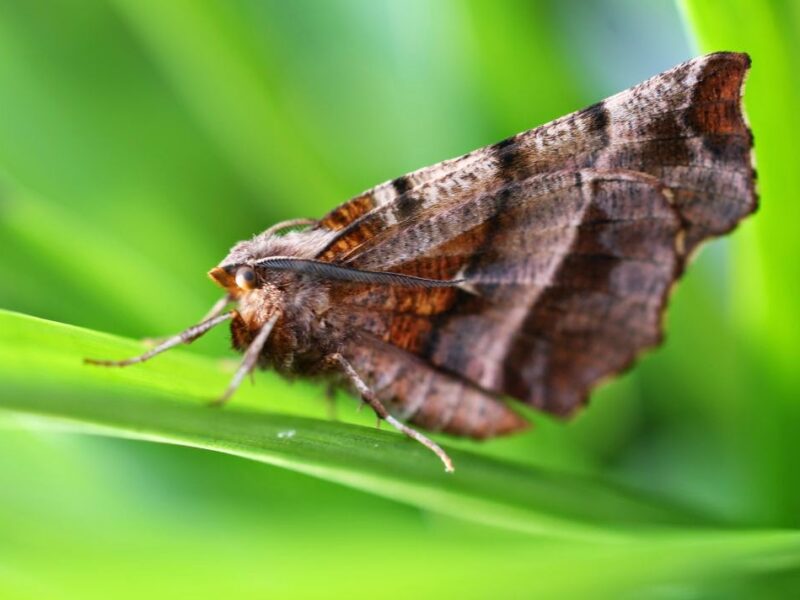
Early Thorn (Selinia dentaria) The Early Thorn (Selinia dentaria) arrives. Selinia (the moon) refers to the little lunate shapes on the wing – in the photograph you can see that this moth’s antenna is just crossing one; dentaria from dentis a tooth – the jagged edge of the wings. This moth was named by Fabricius in […]
10 April 2014
10 April 2014 – The Grief of War
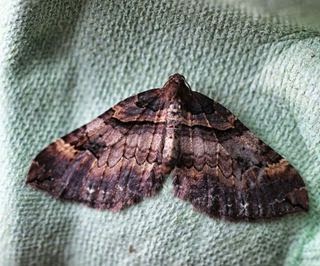
Shoulder Stripe (Anticlea badiata) It would be either a Shoulder Stripe or a Water Carpet, or at least that is what I thought when this delta-winged moth appeared this morning. Shoulder Stripe (Anticlea badiata) was what it turned out to be. The woody markings and upraised abdomen making a delightful picture. Look carefully and you will […]
9 April 2014
9 April 2014 – A Wingless Moth
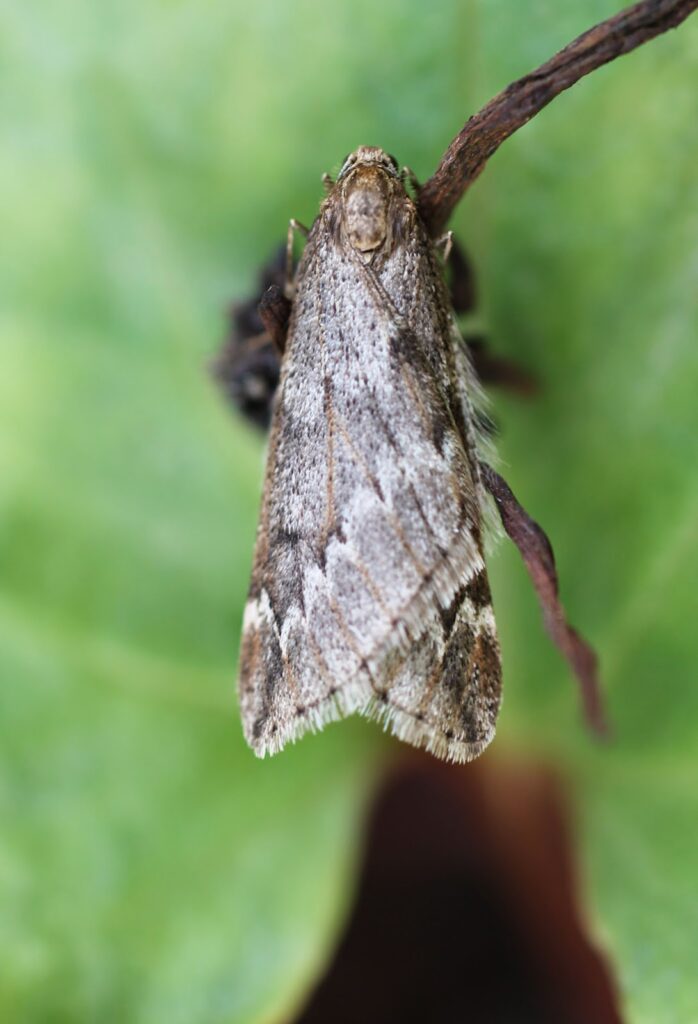
March Moth (Alsophila aescularia) The March Moth is not a new species but it hasn’t been photographed at Shandy Hall before. The wing patterning is striking and the wings themselves wrap around the moth’s thorax and abdomen like a North American Indian’s shawl. The males fly throughout March and April but the females have to […]
8 April 2014
7 April 2014 – Lithophane
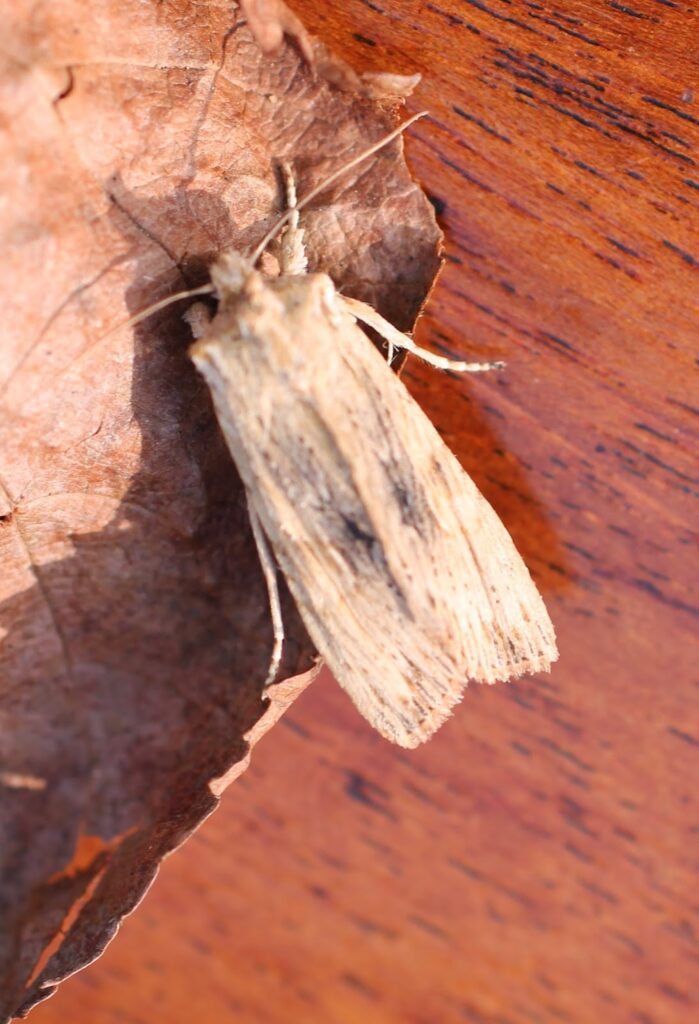
Pale Pinion (Lithophane hepatica) This moth feeds on sallow catkins in the spring and ivy flowers in the autumn, both of which are to be found at the moment in the gardens – my sneezing is sufficient evidence. The Latin name: Lithophane (Greek lithos, stone; phaino, ‘to appear to be like’) and hepatica ‘liver coloured’, give a […]
Recent Moths
- Rise of the AI Naturalist
- Best Moths for a Haunted Abbey
- The Real and Fake Deaths of Moths
- The Colonizers of Yorkshire
- Glamour in the Dark: Two Newcomers Arrive at Shandy Hall
- 25 July 2023 – Collective Noun for Hawkmoths
- MOTH LIST to August 2023 with links
- 28 July 2023 – TRIPLE New Species Alert!
- 18 July 2023 – A Golden…Plusia!
- 13 July 2023 – Arts and Sciences
- 10 July 2023 – Rise of the Yellow Underwings
- 4 July 2023 – Cold-weather Catch